Space Missions
LEO-PNT Signals Aren't Just Closer GNSS: Inside CELESTE's Four-Band Plan
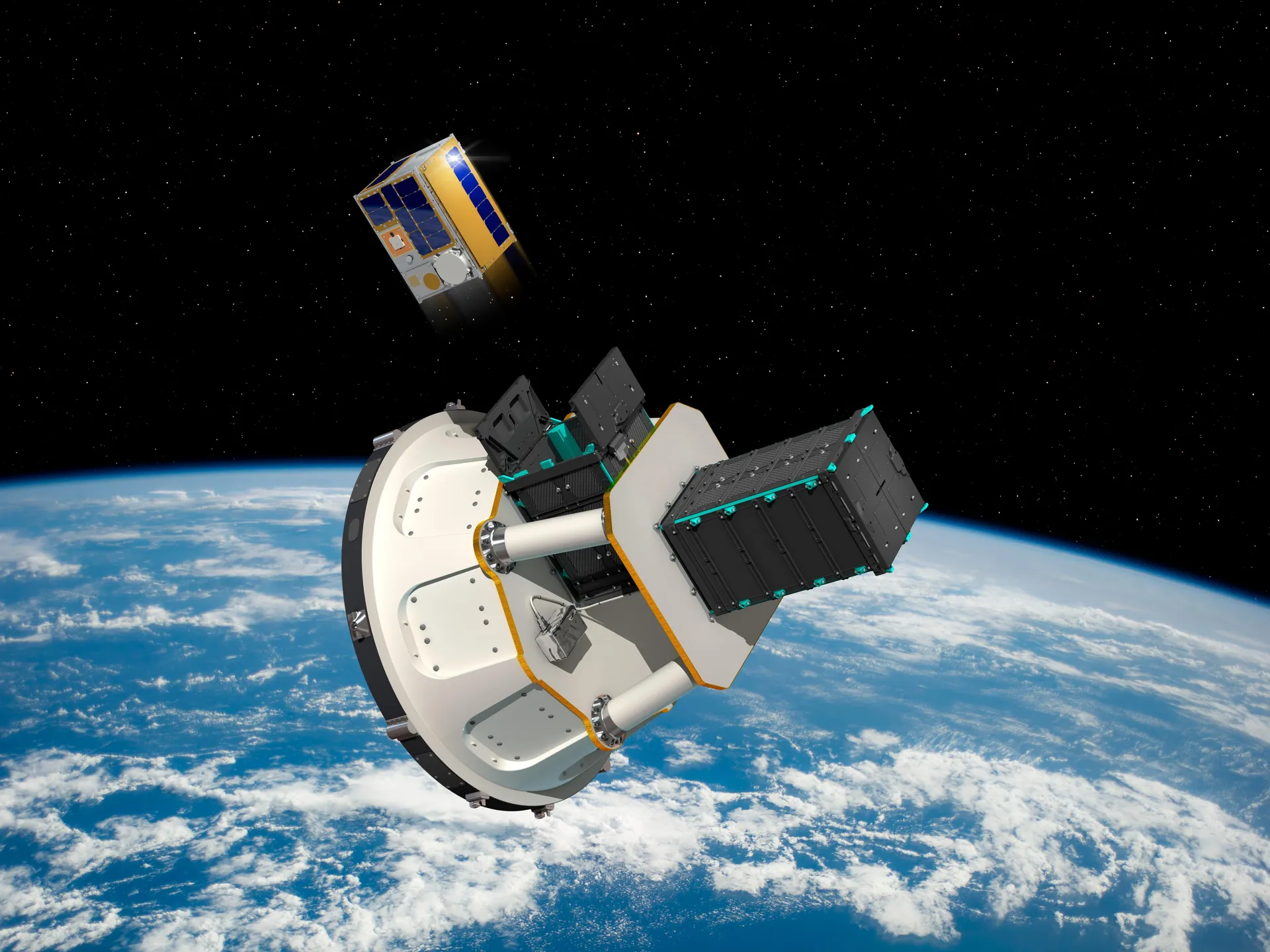
LEO-PNT signals are not simply louder copies of current GNSS. ESA’s CELESTE demonstrator broadcasts Positioning, Navigation and Timing (PNT) across four frequency bands (L, S, UHF and C), splits each signal into pilot, data and acquisition components, and deliberately mixes Frequency Division Multiple Access (FDMA) with the Code Division Multiple Access (CDMA) that Global Navigation Satellite Systems (GNSS) rely on. The design goal is not one better band but a testbed for many.
For receiver and signal-processing engineers, the interesting part of Low Earth Orbit PNT (LEO-PNT) is not only closer satellites. It is the signal plan: what is transmitted, how satellites are told apart, and what a receiver has to do to acquire and track it. CELESTE is the clearest public example to reason from, so this walks through its signal design band by band.
How CELESTE compares to Galileo
For anyone coming from a GNSS background, the fastest way to place CELESTE is against the system it borrows the most from.
| Aspect | Galileo (MEO) | CELESTE (LEO demonstrator) |
|---|---|---|
| Orbit altitude | ~23,222 km | ~510 km |
| Bands | L band only (E1, E5, E6) | L, S, UHF, C |
| L-band centre | (E5) | (E5) |
| Multiple access | CDMA | CDMA (L) and FDMA (S, UHF) |
| Signal components | Pilot + data | Pilot + data + acquisition |
| Spreading codes | Memory codes | Memory codes |
| Status | Operational | In-orbit demonstration |
Read down that column and the pattern is clear. CELESTE keeps what works about Galileo, the E5 slot, the pilot/data split, memory codes, and then treats everything else as a variable to be measured: three more bands, a second multiple-access scheme, a dedicated acquisition channel, and a frequency-hopping mode in some configurations that deserves its own discussion. It is less a finished signal than a structured set of questions about what an operational European LEO-PNT signal should eventually be.
The four bands, and why a demonstrator needs all of them
Every operational civil GNSS lives in L band. GPS, Galileo, BeiDou and GLONASS all crowd the 1.1 to 1.6 GHz Radio Navigation Satellite Service (RNSS) allocations, because L band is the rain-tolerant, moderate-antenna sweet spot for a signal that has to reach a phone. CELESTE keeps a foot there, then deliberately steps outside it.
The signal plan spans four bands:
| Band | Signal |
|---|---|
| L (RNSS) | E5 |
| S | SR |
| UHF | UHF |
| C | (reserved) |
That L-band freqeuncy is not a coincidence: it matches is the Galileo E5, so CELESTE inherits a well-characterised RNSS slot and, with it, a large body of receiver work. ESA has been explicit that L band is the “master” band for its LEO-PNT plans, and the demonstrator treats the others as experiments hung off that anchor.
Why bother with the rest? Each band buys something a receiver designer can measure. UHF, at 465 MHz, penetrates foliage and structures far better than L band and carries further round obstructions, at the cost of tiny fractional bandwidth and a big antenna. S band, at 2.5 GHz, offers more spectrum and smaller antennas. C band, which ESA has publicly tied to resilience, sits in cleaner, more protected spectrum that is harder to jam with cheap L-band hardware. An operational system might not fly all four; a demonstrator flies them precisely to find out which trade is worth making. The public signal plan details L, S and UHF fully and reserves the C-band specifics, with its carrier frequencies flagged as still likely to change.
Anatomy of a CELESTE signal: pilot, data, acquisition
Within each band, a CELESTE signal is not one waveform. It is a set of components sharing the carrier. This is the same philosophy modern GNSS already uses, taken a step further.
- Pilot component. A dataless channel: pure spreading code with no navigation bits to flip the carrier. Because nothing modulates it, a receiver can integrate it coherently for far longer than a data channel allows, which is what delivers sensitivity and clean carrier-phase tracking. In CELESTE’s L band the pilot and data split the power 50/50.
- Data component. Carries the navigation message. It is offset 90 degrees in phase from the pilot, so pilot and data ride the same carrier in quadrature without colliding. Its symbol rate is modest by design (500 symbols per second in UHF, for instance), because the pilot does the precision work and the data channel only has to deliver ephemeris and clock parameters.
- Acquisition component. Present in S band and UHF, absent in L. This is the interesting one: a short, fast-repeating code (341 chips, a one-millisecond period) whose whole purpose is to let a cold receiver find the signal quickly. A short code has few phases to search, so acquisition is cheap; the longer pilot codes then take over for precision once you have a rough lock.
That three-way split is a direct answer to a LEO-specific problem. A satellite 500 km up sweeps across the sky in minutes, not hours, so the Doppler shift and its rate of change are far larger than anything a GNSS receiver sees. Giving the receiver a dedicated, easy-to-find acquisition channel is how you keep cold-start times sane when the whole constellation is racing overhead.
FDMA or CDMA? How CELESTE tells its satellites apart
Every modern GNSS uses CDMA: every satellite transmits on the same centre frequency, and the receiver separates them by their distinct pseudorandom (PRN) spreading codes. It is elegant and it is why one RF front-end can see the whole constellation. The cost is acquisition: to find a satellite you search a two-dimensional space of code phase and Doppler, and with a fast LEO constellation the Doppler axis of that search balloons. This is how CELESTE counters that:
- L band (E5) is CDMA. Satellites share the carrier and are distinguished by per-satellite memory codes, exactly as Galileo does on E5. A conventional GNSS front-end tuned to 1191.795 MHz is already most of the way to receiving it.
- S band and UHF are FDMA. Satellites are separated by frequency offset instead: each is assigned a channel a fixed multiple of channel spacing. S band defines a comb of data channels and a finer set of acquisition channels stepped by a third of that; UHF does the same with fewer channels. This is closer in spirit to legacy GLONASS than to Galileo.
Why would a navigation system reach back to FDMA, which the GNSS world spent two decades moving away from? Because the thing that made CDMA acquisition hard, a huge Doppler search, is exactly what LEO makes worse. If each satellite already lives on its own frequency channel, the receiver can lean on that separation instead of resolving everything in the code domain at once. The trade is a more complex front-end that has to tune across channels, and the loss of the “one frequency, whole sky” simplicity. CELESTE flying both, in different bands, on the same satellites, is a controlled experiment in which one is worth it.
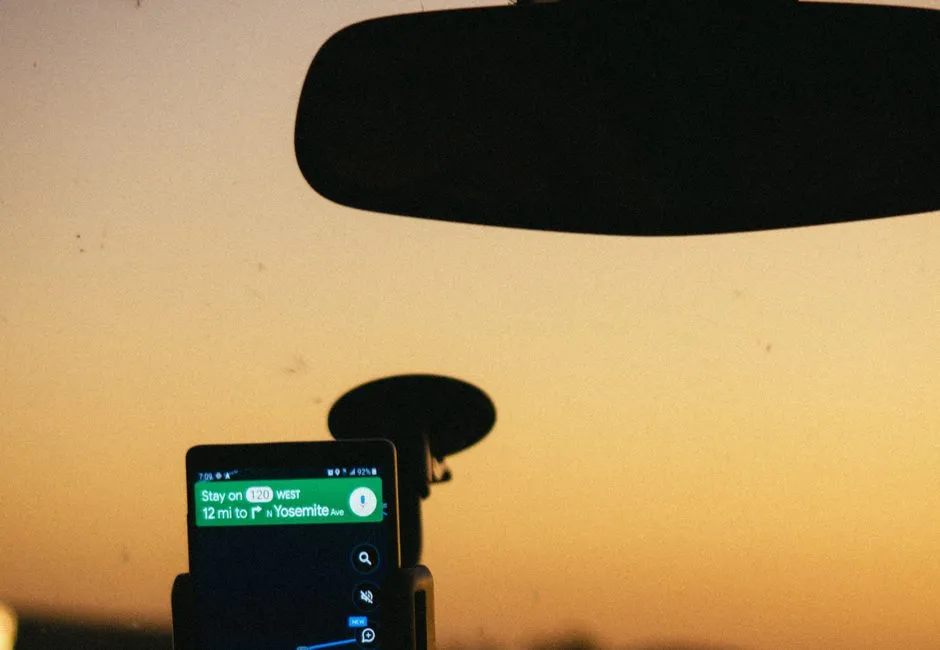 Every trade in the signal plan is ultimately judged at the receiver: the phone or car unit that has to acquire and track a fast LEO constellation, not just a lab correlator. Photo by Athena Sandrini.
Are LEO-PNT signals really stronger? The link budget, honestly
The slogan for LEO-PNT is that its signals arrive far stronger than GNSS. The physics behind the slogan is free-space path loss, which grows with the square of distance. A satellite at roughly 510 km is about 30 to 40 times closer than a GNSS satellite at 20,000-plus km. Run that through the path-loss equation and the geometric advantage is real: 20 times the log of the distance ratio works out to roughly 30 decibels of headroom at high elevation, before you account for slant range at low elevations eating into it.
So the honest version of the story is not that every LEO signal is automatically 30 dB hotter than GNSS. It is that the geometry hands you a large budget, and the design choice is where to spend it. CELESTE spends part of it on a high ceiling, but with a high dynamic range, creating real receiver-facing consequence: a front-end automatic gain control has to cope with a signal that can be an order of magnitude stronger overhead than at the horizon, and the extra margin is what makes indoor and urban-canyon reception plausible in a way L-band GNSS never was. All of these infromation carry an explicit “to be confirmed” flag, so treat them as design intent for a mission still in build.
Memory codes, and two satellite generations
Two more details shape what a receiver has to store and expect.
First, the spreading codes are memory codes, not shift-register sequences. Classic GPS C/A codes are generated on the fly by a pair of linear feedback shift registers; you implement the register and the code falls out. CELESTE instead defines its codes as fixed tables to be stored, the same route Galileo took for its longer primary codes. For a receiver that means the codes ship as data, not as a formula.
Second, CELESTE deploys in two waves, Pathfinder A first and Pathfinder B later, and the signal plan differs between them. A receiver built for the demonstrator has to handle both. This is what an in-orbit demonstration looks like from the signal side: not a frozen standard, but a deliberately variable one.
Frequently asked questions
What is LEO-PNT and how is it different from GPS or Galileo?
LEO-PNT is Positioning, Navigation and Timing delivered from Low Earth Orbit, typically a few hundred kilometres up, rather than the roughly 20,000 km Medium Earth Orbit that GPS and Galileo use. The satellites are far closer, so their signals arrive with more link-budget margin and sweep across the sky faster, which changes both the physics and the receiver design.
What frequency bands do LEO-PNT signals use?
There is no single answer yet, which is the point of a demonstrator. ESA’s CELESTE specifies signals in L band , S band , UHF and C band. Operational GNSS uses L band almost exclusively, so the wider spread is deliberately experimental.
Why do LEO-PNT signals use FDMA instead of only CDMA?
CDMA acquisition means searching code phase and Doppler together, and a fast LEO satellite makes the Doppler part of that search much larger. Separating satellites by frequency channel (FDMA), as CELESTE does in S band and UHF, lets a receiver lean on that separation instead of resolving everything in the code domain. The cost is a more complex, tunable front-end.
Are LEO-PNT signals really stronger than GNSS?
The geometry gives roughly 30 decibels of free-space path-loss advantage at high elevation, but CELESTE’s specified minimum received power is still in the same class as Galileo’s. The real difference is dynamic range: its maximum received power runs about ten decibels higher, so overhead passes can be far stronger than anything MEO GNSS delivers.
Do I need a new receiver for LEO-PNT signals?
For the L-band CDMA signal at the Galileo E5 frequency, an existing GNSS front-end is most of the way there. The S-band, UHF and C-band signals, the FDMA channelisation and the higher Doppler dynamics need new front-end and acquisition work, which is a large part of what the demonstrator exists to inform.
Will LEO-PNT replace GNSS or work alongside it?
The consistent message from ESA and commercial players is complementary, not replacement. LEO-PNT adds a stronger, faster-converging, harder-to-jam layer on top of the government Medium Earth Orbit constellations, and receivers are expected to fuse both rather than choose one. The demonstrators exist to prove that layer, not to retire GPS or Galileo, whose global coverage and long track record remain the backbone.
Sources and further reading
- ESA: CELESTE, the mission overview for ESA’s LEO-PNT in-orbit demonstration within the FutureNAV programme.
- Inside GNSS: ESA’s Giordano outlines CELESTE LEO-PNT, on the band plan (UHF, L, S, C), the 510 km demonstrator and the 2032 operational target.
- European GNSS Service Centre: Galileo OS Signal-in-Space ICD, the reference for the E5 band, pilot/data structure and memory codes that CELESTE builds on.